

Introducing OT Fabric
Open-source protocol libraries and tools for industrial data, built by people and AI agents together.
Industrial data is trapped behind legacy protocols, vendor boundaries and one-off integrations. OT Fabric is our answer: an open, tested foundation for talking to the devices that run factories, grids and buildings.
What is available today
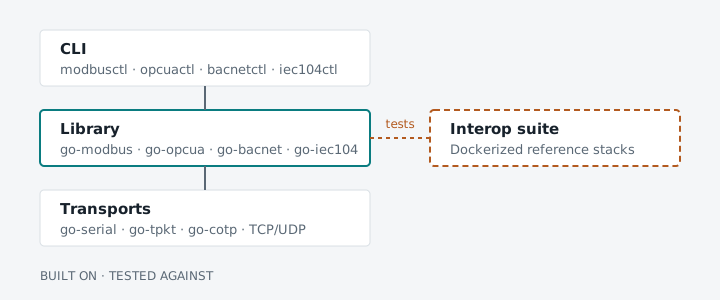
Seven protocols, each with the same three parts, as the diagram above shows:
- A pure Go library, with no cgo and, for most protocols, no dependencies outside the standard library.
- A command-line tool for commissioning, troubleshooting and scripting, with JSON output and stable exit codes.
- An interoperability suite that runs the library against independent implementations in containers.
Reading four holding registers from a Modbus TCP device looks like this:
regs, err := client.ReadRegisters(ctx, 1, 100, 4, modbus.HoldingRegister)if err != nil { log.Fatal(err)}fmt.Println(regs)Or, without writing any code:
modbusctl client poll --ip 192.168.1.10 --start 100 --count 4Built by people and AI agents
OT Fabric is built by engineers and AI coding agents working together. Engineers bring the protocol knowledge and own every decision; agents bring speed and breadth. What keeps that honest is the same bar for everything we ship: public code, public tests, and interop suites that check it against other implementations.
Where we go next
- Full coverage of all relevant OT protocols
- IT2OT gateways and data connectors
- OT MCP servers, so AI agents can discover, read and work with industrial devices safely
Browse the project catalog, start with a protocol guide, or open an issue on GitHub.